

What is a Panel PC?
Very common in industry and retail, the Panel PC is part of our everyday life. We encounter it regularly without necessarily knowing its name or specific features.
In short: a Panel PC is a computer integrated into a touchscreen display, designed for industrial and interactive applications.
Definition of a Panel PC
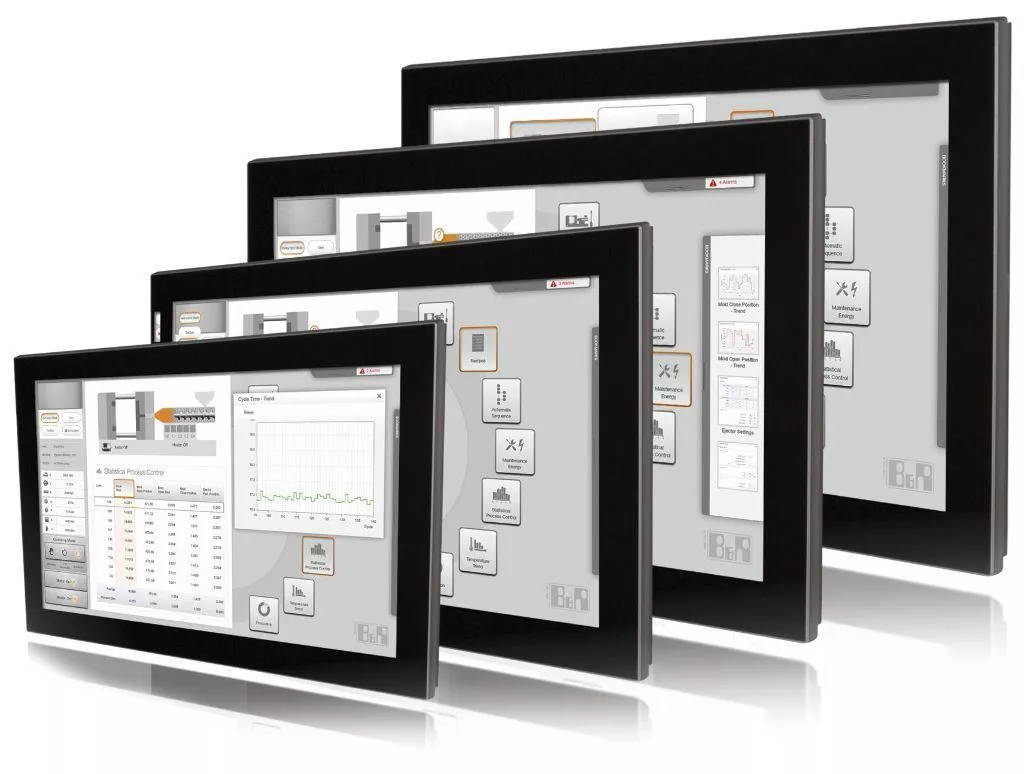
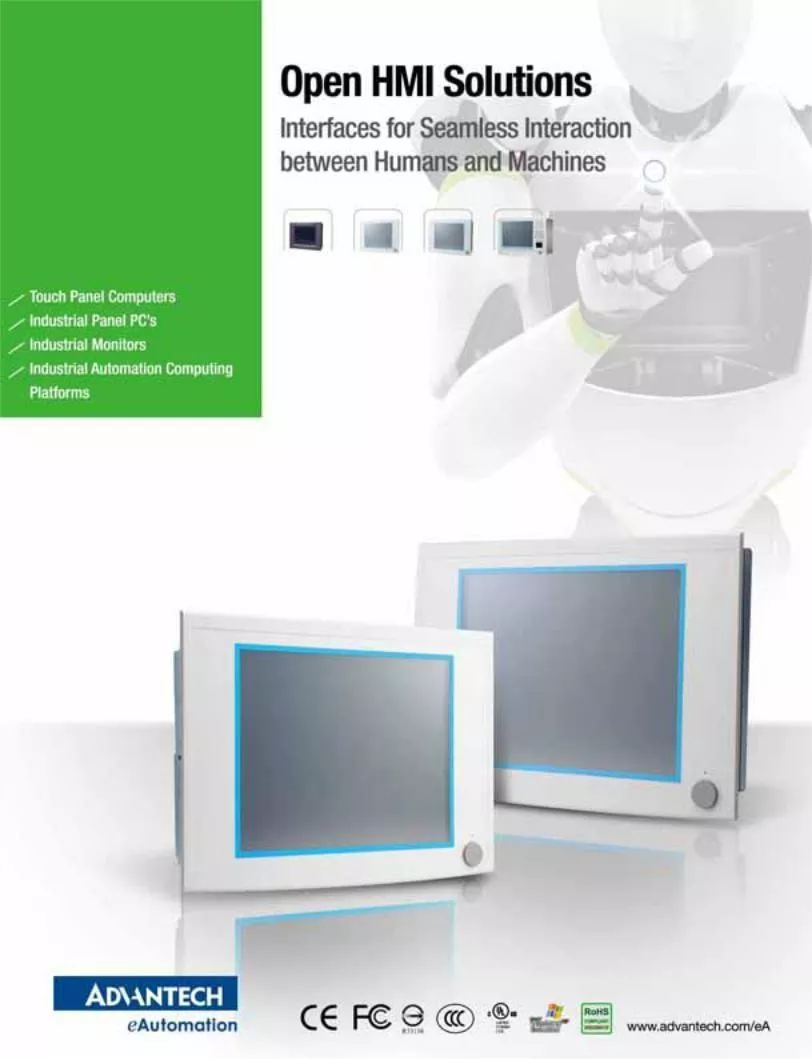
The Panel PC is an industrial PC integrated into a touchscreen monitor, designed for easy operation and improved responsiveness.
This all-in-one device is much easier to install, as it requires fewer cables and only one piece of equipment to set up. On our website, you can also discover the differences between a rugged display and a consumer-grade display.
As an example, most point-of-sale (POS) systems used in retail stores are actually Panel PCs. This equipment enables intuitive navigation thanks to its touchscreen interface, allowing for quick staff training. Panel PCs are also widely used in industry, train stations, offices, control rooms, and self-order kiosks in fast-food restaurants, among others.
Many brands specialize in these systems. The market leaders we partner with include Advantech, Axiomtek, and Nexcom.
What are the characteristics of a Panel PC?
The durability of the industrial PC
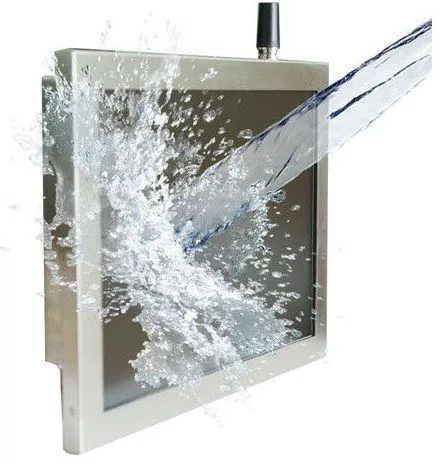
As an industrial computer, the Panel PC is particularly rugged. It is designed to be used in harsh environments where consumer-grade computer equipment would not withstand the conditions. It is commonly found in hospitals, public places, and in the industrial sector. Panel PCs therefore remain operational even under difficult conditions.
Some models comply with the IP65 / IP66 standard and are resistant to water and dust thanks to a sealed enclosure. Others are designed to withstand intense vibrations and can be installed close to a production line. This type of equipment, intended for professional use in extreme environmental conditions, may also be referred to as a rugged Panel PC, similar to rugged PCs.
Electronics are not, by default, designed to operate in very low or very high temperatures. However, some Panel PCs are capable of functioning in extreme temperature environments. This is why they can be used outdoors, close to machine tools, industrial furnaces, or in refrigerated areas.
A Panel PC may also be referred to as a PPC, Touch PC, touchscreen PC, tablet PC, HMI, or Tablet PC.
Divers matériaux pour diverses utilisations
Depending on requirements, the structure of industrial computing equipment can be made from various materials. For example, aluminum and stainless steel do not rust and are therefore ideal for a Panel PC exposed to splashes. In such conditions, galvanized steel is generally avoided and is instead chosen for its mechanical strength in other use cases.
Aluminum dissipates heat efficiently and is very lightweight. It is therefore well suited for mobile use or for fanless designs (without ventilation). Stainless steel offers excellent resistance to corrosion and to high-pressure cleaning with detergents, a critical requirement in the food processing industry.
It is therefore essential to clearly define the operating conditions of each Panel PC before making a purchase.
Displays adapted to the industrial sector
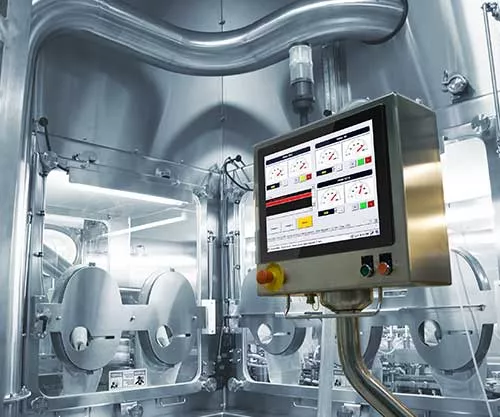
Historically, all Panel PCs were equipped with resistive touchscreen technology. Nowadays, it is increasingly common to find models featuring capacitive touch technology, also known as multi-touch or PCAP. These screens can be operated while wearing plastic or wool protective gloves, and even with tools. This capability greatly simplifies user interaction and significantly improves productivity.
The displays are mainly LCD TFT panels with LED backlighting. For outdoor use, Panel PC screens may include various options such as anti-glare coating, high-brightness backlighting, or even integrated heaters that protect the liquid crystals from low temperatures. Finally, displays designed for outdoor environments can be reinforced to withstand vandalism.
Today, two main screen aspect ratios are commonly found: 4:3 and 16:9.
The former has been historically used in the industrial sector, and a large number of applications are still designed for this format. It is also easier to integrate into an automation control cabinet.
The latter, more recent and also referred to as widescreen, is better suited to modern software solutions.
All the performance of an industrial PC
The Panel PC is powerful, despite its compact form factor, which leaves limited space for the computing components. It is capable of handling the same functions as an industrial computer: enterprise resource planning (ERP) software, IP camera operation, real-time data acquisition, 2D and 3D video processing, and more. It can, for example, simplify the management of inventory and production lines. Thanks to its increasingly affordable price, and despite its performance, the Panel PC is sometimes used as a simple display panel for broadcasting information within a company or in public spaces.
Like standard computers, this range of touchscreen equipment follows the evolution of professional processors, particularly those from Intel. As a result, Panel PCs are available with Atom, Celeron, Intel Core i3, i5, i7, and some ARM-based processors. These processors are designed for long-term availability and are typically supported for 7 to 15 years.
Most small Panel PCs, intended to control a single machine, are equipped with Intel Atom processors, which combine adequate performance with efficient thermal dissipation and relatively low power consumption. This characteristic aligns perfectly with current trends focused on reducing energy consumption without compromising efficiency or reliability. Each device runs an application hosted on a central server via the site’s Ethernet network. This approach enables a decentralized IT architecture, resulting in greater reliability and enhanced security.
Devices that control multiple machines or are used for supervision are equipped with more powerful processors such as Intel Pentium (including the Core i range) or Celeron processors. These allow the installation of resource-intensive applications, for example those used for machine vision and video stream processing.
For improved data protection, Panel PCs are now commonly manufactured in fanless designs. For even greater reliability, some models feature dual hard drives installed in parallel, offering resistance to shock and vibration.
Connectivity and inputs / outputs
The Panel PC is equipped with numerous ports, depending on the model: USB, LAN, VGA, HDMI, serial ports, DisplayPort (DP), and Ethernet. It can also integrate Bluetooth, Wi-Fi, 4G LTE, and even 5G, depending on the requirements. These connectivity needs arise in many use cases, such as construction machinery, non-connected machines, or test benches.
On some models, PCI card readers and CompactFlash card slots are available on the front panel. Panel PCs can also be connected to additional peripherals such as secondary displays, barcode or biometric readers, emergency stop buttons, signal lights, and more.
To improve efficiency, it is possible to monitor and control all Panel PCs within a company remotely and centrally.
Mobility and adaptability
Very compact, the Panel PC can be wall-mounted, flush-mounted, VESA-mounted, pole-mounted, or in some cases transported on a dedicated cart. It can also be installed on a swing arm or pivoting mount, providing greater flexibility in use. It can be powered from the mains supply, but depending on the model, it may also operate on a battery, making it easier to manage and monitor standalone or isolated machines.
For even greater mobility, and with similar physical characteristics, the rugged tablet has also been developed. It has the form factor of a consumer touchscreen tablet, but is fully ruggedized and therefore requires no additional protective casing.
All operating systems
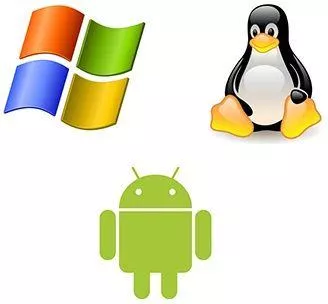
These touchscreen devices are designed to meet a wide range of requirements. This is why manufacturers and integrators must offer solutions compatible with all major platforms. Today, it is possible to find models compatible with:
- Microsoft Windows: XP, Windows 7, Windows 8 / 8.1, Windows 10 Pro, Windows 10 IoT, Windows 11
- GNU/Linux distributions such as Ubuntu, Red Hat, CentOS, Debian, and others
- Google Android, available in many versions, including the most recent ones
As a result, regardless of the operating system your applications run on, Integral System can provide you with the solution best suited to your needs.
The kiosk: a compact and cost-effective Panel PC
Increasingly common especially in retail stores, touchscreen kiosks help improve both service quality and the customer experience. Customers can use these multimedia terminals to check product prices, view loyalty card points, locate items in-store, or request assistance. Like all consumer-facing Panel PCs, they are ruggedized to withstand shocks and vibrations.
It should be noted that the latest generation of Panel PCs, known as thin clients, comes in two use cases:
- Kiosk mode: an all-in-one version with a pre-installed operating system and a web browser that launches at startup. These models are generally equipped with low-power processors.
- Thin client: assembled by Integral System, it is typically fanless and also uses low-power processors, but is customizable, including the choice of operating system.
En résumé, le Panel PC est un équipement informatique robuste, pouvant fonctionner dans des conditions extrêmes. Il existe de nombreux modèles, de toutes les tailles, de toutes les puissances avec des fonctionnalités adaptées à l'utilisation de chaque entreprise. Il est conçu pour s'adapter parfaitement aux machines utilisées par les commerces et les industries de tous les secteurs.