

What are the differences between a tower and a rack server?
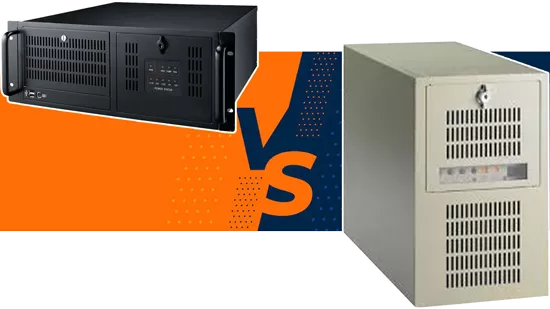
For small and medium-sized businesses, having a computer server comes at a cost. It is a significant investment, yet it is essential. Indeed, a server is necessary to store the company's data. Among its functions are file storage, intranet, messaging, website hosting, business tool applications, monitoring applications, or even databases. These elements show that the choice of a computer server requires careful consideration. You must take into account numerous criteria. Between tower servers and rack PCs, which format suits your needs? What are the differences between them?
What is a tower server?
A server is a computer that handles a significant workload within a company. Its name comes from its function. It provides information and various services to other stations via a network connection. The computers that interact with the server are called "clients". A server can come in different shapes and sizes. In this respect, the tower is undoubtedly the most well-known.
The name "tower server" may evoke a large computer. However, it is the smallest server format. It can take the form of a shoebox PC. Below the PC tower server, there is only the micro server. This model operates autonomously. It meets all the requests of the "clients" through the components it contains.
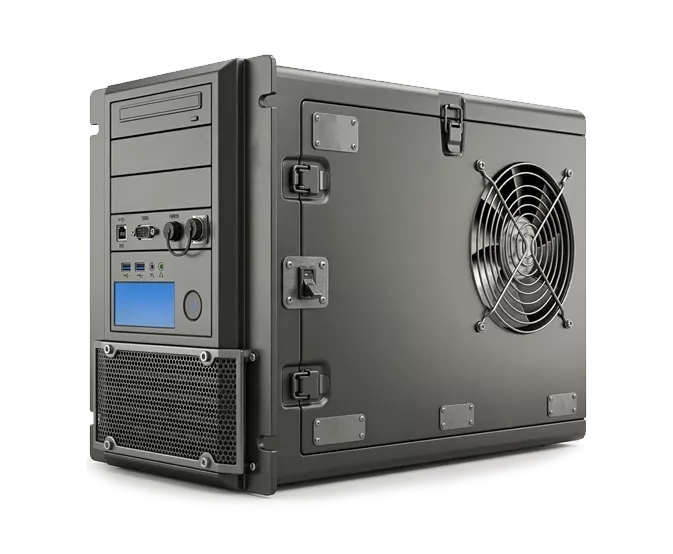
To ensure its operation, it must be connected to a network. The tower server has a network card to connect with other computers. Since it closely resembles a desktop computer, it is equipped with a built-in fan to prevent overheating.
There are many options and versions available. Similarly in the industrial field. Just like a more classic industrial PC, the shoebox PC can be compatible with an industrial environment. It is therefore robust, sturdier, with a resistant metal chassis. It is also often designed to withstand vibrations, for example.
What is a rack server?
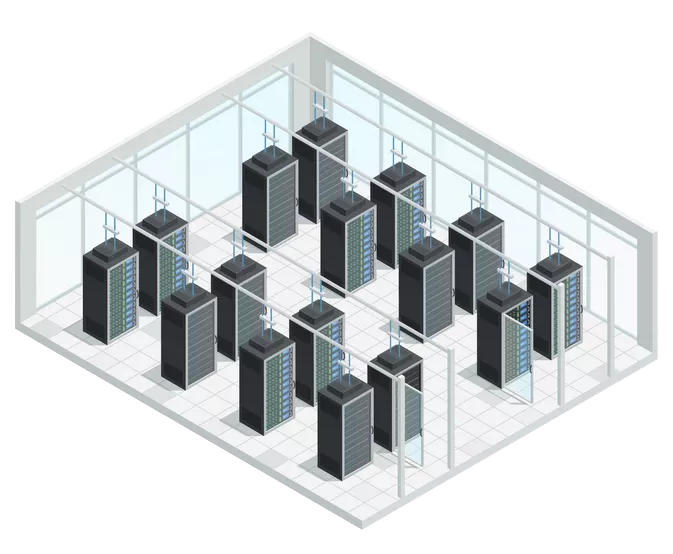
A server is called a « rack » or mounted in a server rack when it is placed in a « rack » cabinet in English. The 2U rack or 4U rack consists of several slots, known as « bays ». These are designed to accommodate various types of IT equipment. The rack PC is a very compact format.
A rack can hold multiple servers stacked on top of each other. This arrangement allows it to share resources and optimize space. As a result, this server model makes it easier to manage the wiring of components within a company.
However, a rack PC must be equipped with a good cooling system to prevent overheating of the computers. Indeed, a rise in temperature can quickly occur when devices emit heat in a confined space. One important point to consider in the rack-mounted format of these computers is the depth. There are 19" chassis (the most common) that take the full depth of a server bay and a short chassis that only takes half.
The difference between the two types of servers
You will recognize a tower PC server by its format. Indeed, it resembles the central unit of a shoebox PC. Its installation is easy and does not require much space. It can be installed in any room of your business.
The tower server stands out due to its compactsize. However, compared to other server formats, it is less powerful. Thus, it is mainly aimed at small businesses, whose data needs are less significant. With this model, a single machine is enough to store all the data. Moreover, its price is close to that of a desktop computer at purchase.
Since maintenance is essential in the upkeep of a server, this model requires less maintenance than other types of servers. The tower server represents the ideal solution for businesses looking to diversify their information system. Easy to use and robust, you won’t have to allocate a significant budget for its maintenance.
Once the server is in place, the user can proceed with several configurations. For example, they can increase the storage volume by adding hard drives, as well as processors. A tower server can accommodate an average of two processors and six hard drives. For a business with 25 workstations, this format successfully meets its needs.
On the other hand, the rack server is housed in glass cabinets, which are specially designed to hold IT equipment. These cabinets are also called racks. The latter can stack multiple equipment at once. Consequently, it helps optimize the performance of several devices. The rack houses the security appliance and the storage server.
Thanks to its features, the rack can accommodate several physical servers. This allows the business to distribute the role of each server. One server dedicated solely to messaging, another for the software used in the company, a different model for storage.
Compared to the tower server, the rack requires a larger investment. This price difference can be attributed to its significantly higher storage capacity. Furthermore, it is also scalable. Users can easily increase its performance.
Rack servers are aimed at medium-sized businesses. Smaller companies working in the IT sector can also opt for this format.
How to choose the server that meets your needs?
The server represents the brain of your computer system. A company that must manage a large amount of data must use this device. The server fulfills several functions. First, it allows to store and host all files as well as the company's documents.
Next, it contributes to the security of your IT data by performing regular backups. The server also ensures file sharing and synchronization among the company's employees. A server can handle the management of professional software as well as email solutions. Using a server lightens the employees' computers in terms of storage. Thus, the company can use less powerful and less expensive computers.
How to choose the server that meets your needs? First of all, there are many server solutions, it is up to the company to find one that meets its criteria. The first criterion to consider concerns the use of the server. In this case, it must match the number of employees in the company. If your company has fewer than 25 employees, a tower server meets your needs. Regarding the configuration, one processor and two to four hard drives are sufficient for the server to operate normally. On the other hand, if your company uses multiple software at once or has a workforce of more than 25 people, four to six hard drives are necessary as well as two processors.
The second criterion to consider is the volume of data that your server must process. This involves knowing the frequency of backups, the extent of data sharing among employees, and the existence of internet sites.
The 2U rack and 4U rack are excellent solutions if your company has a large amount of data. Indeed, the computer rack has a large internal storage capacity. It is also aimed at small businesses oriented in the field of computing or a medium-sized company, whose staff far exceeds 25 employees. For leaders who are looking for servers that combine multiple functions, the rack is an interesting solution.
In conclusion, in an increasingly connected world, the server plays a strategic role. Online information, services, files, and online videos are all elements that a server houses.