

HMI Thin Client Panel PC & Industrial Web Panel
Discover our industrial Panel PCs designed for thin-client applications (Thin Client or Web Panel), such as RDP remote desktops, remote access or access through a web browser. Our standard range includes models from 7" to 21.5".
Discover our online guide: How to choose an industrial Web Panel?
These solutions are predominantly fanless and use architectures based on low-power processors such as Intel Atom, Intel Celeron or ARM processors. They therefore feature processors with a limited number of cores and a low clock speed in GHz. RAM is installed according to your requirements. They are generally used with cloud/SaaS, MES and HMI applications, as well as for production monitoring and manufacturing process visualisation.
The Panel PC, particularly a Windows 11 thin client, provides considerable flexibility when deploying complex applications. This touchscreen PPC solution is perfectly suited to both current and future requirements, ensuring optimal use of web applications (software that runs from an HTML web page directly within a browser). These HTML5- or SVG-based pages require relatively few resources and therefore need little processing power. In the age of Industry 4.0, these industrial thin clients are increasingly popular for integration into all types of machinery, machine tools and other industrial or factory environments.
Read more ↓
Show less ↑

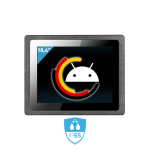
WPC002-104NAT
10.4" WebPanel WPC002-104NAT

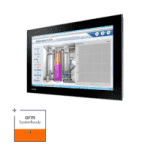
![Product [Yocto] 10.1" Touch Panel Computer with ARM Cortex™-A53 Processor Image](https://www.integral-system.fr/media/cache/is_sylius_shop_product_main_box/82/0d/7ae41da3f3b7a1fc75bdf6ac4433.jpg)
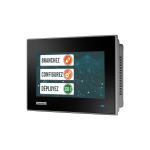
TPC-107W-N32YB
7" Touch Panel Computer with ARM Cortex™-A53 Processor
118 product in HMI Thin Client and Web Panel
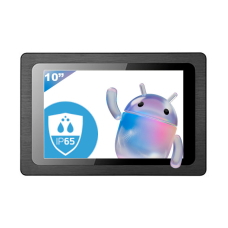
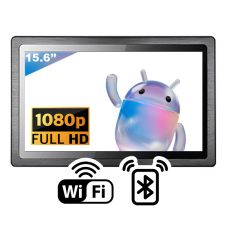
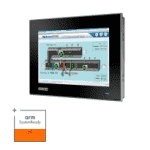
WPC002-156NAT
15.6" WebPanel WPC002-156NAT
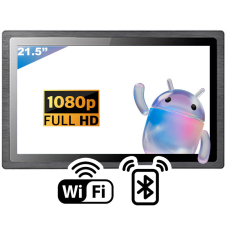
WPC002-215NAT
21.5" WebPanel WPC002-215NAT
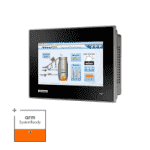
TPC-107WX-N32YA
Yocto 4.0 7" High Brightness Touch Panel Computer with ARM Cortex™-A53 Processor -30~70°C
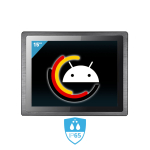
WPC002-150NAT
15.0" WebPanel WPC002-150NAT
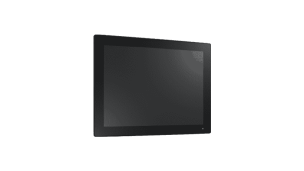
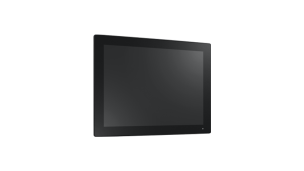

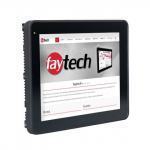
FT10N4200CAPOB
10" Touch PC Capacitive N4200
WPC002-101NAT
10.1" WebPanel WPC002-101NAT
WPC002-104NAT
10.4" WebPanel WPC002-104NAT
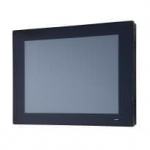
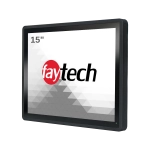
FT15N4200CAPOB
15" Capacitive Touch PC with N4200
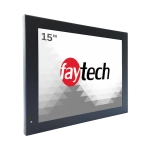
FT15N3350W4G128G
15" Resistive Touch PC with Intel N3350
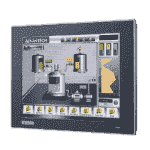
PPC-324W-P730B
23.8" Fanless Panel PC with Intel Core™ i Processor
Why choose a thin client?
The term thin client is the opposite of thick client. Historically, a thick client is an application installed directly on the PC or Panel PC. This type of software is called a thick client because it generally requires significant processing power. For example, many SCADA solutions use a thick client. A large number of calculations are usually performed locally, meaning that a more powerful processor is required. In this type of situation, we generally recommend powerful Panel PCs equipped with Intel Core or Intel Xeon processors.
By contrast, a thin client requires very few processor resources, as all calculations are performed on a centralised server rather than on the local machine. A thin client is also generally provided as a web application that can be accessed using an internet browser.
If your business application offers a thin client, we recommend using a thin client Panel PC, which offers numerous advantages, including:
- A low-power single-core or dual-core processor, such as an Intel Atom, Intel Celeron or ARM processor
- 4 or 8 GB of RAM and limited storage capacity
- A low-power processor that can deliver substantial savings on energy bills
- A smaller footprint, particularly in terms of depth
These features make it an energy-efficient Panel PC offering excellent value for money and requiring a much lower investment than a conventional touchscreen PC.
Minimal connectivity
This type of product often offers limited connectivity and therefore only a small number of communication ports. Nevertheless, it generally includes two Ethernet ports, one or two USB ports and sometimes a serial port. Some versions provide additional USB connections for connecting a printer or barcode reader. This means that you can still use your entire system remotely, provided that it is compatible or supported by the remote desktop connection.
Some versions of these industrial thin clients are even equipped with a webcam, smart card reader, NFC or RFID. It is important to check which compatible peripherals are supported. In addition, some models feature a DVI, DisplayPort, HDMI or VGA port for connecting a second remote display.
However, particular attention must be paid to the type of power supply connection. Depending on the model, internal or external power supplies with three-pin or Phoenix connectors are available.
For compatible thin client applications
It is essential to ask the provider of your management system, MES application, HMI, information system, logistics solution or business application about its technical requirements. There are generally three operating modes:
- Remote access (also known as Remote Desktop, RDP or VNC): using a client pre-installed on the solution or the Windows RDP client, you can access a remote working session.
- Web browser: you access your software through a standard web browser, such as Chromium (Windows and Android), Google Chrome (Windows and Android), Microsoft Edge (Windows), Firefox (Windows), etc.
- Compatible interactive client, such as the best-known solutions: Citrix or VMware. In this case, you will require a slightly more powerful processor with a higher clock speed and more cores, as well as more than 8 GB of RAM in many cases.
Depending on the services provided by your application and the environment in which it will operate, you will need to select the appropriate hardware.
Panel PCs: the best choice for industry
Why is an industrial Panel PC the best thin client for the industrial sector? It combines all the functions of a PC and a touchscreen in a compact, generally fanless computing device. This all-in-one solution is therefore usually the preferred option. Panel PCs also generally support numerous mounting methods, including VESA, tube and/or panel mounting.
In some cases, the preferred solution is an industrial PC, such as an Advantech UNO, combined with a rugged touchscreen monitor. The choice depends on the technical requirements and the environment in which your system will operate.
This type of equipment is ruggedised and designed for industrial or demanding environments. It should therefore not be compared with thin client models from HP, Tini, Axel, Lenovo or Dell.