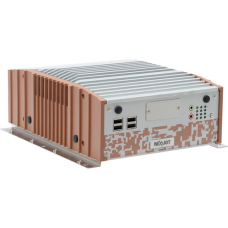
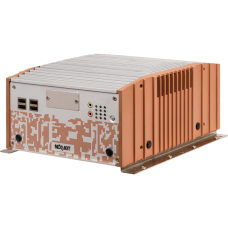
| Manufacturer description |
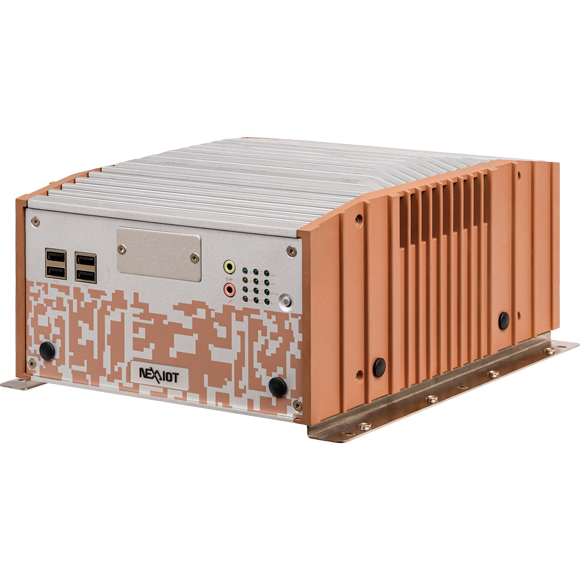
High-performance expandable Edge controller for artificial intelligence applications |
| Processors |
Intel Core Ultra 9, 7, or 5 series 2, embedded range, up to 35 W |
| Computing architecture |
Integrated CPU, GPU, and NPU |
| Intel Turbo Boost |
Disabled by default |
| Chipset |
Intel Q870 |
| RAM |
2 DDR5-6400 CSO-DIMM slots, non-buffered, non-ECC |
| Maximum memory capacity |
96 GB, or 48 GB per module |
| Chassis |
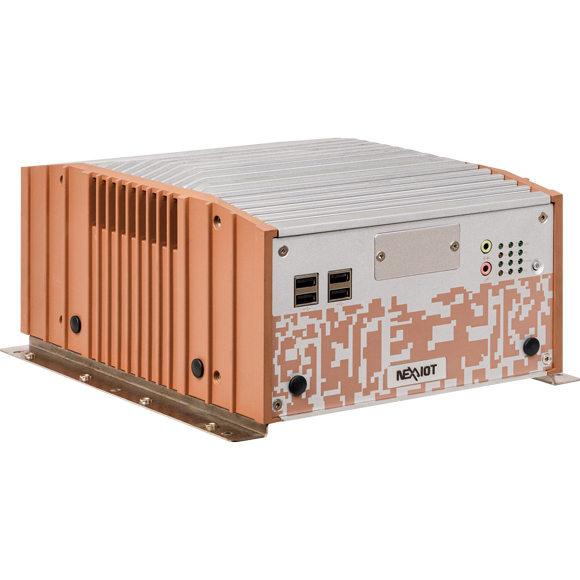
Aluminum and metal, fanless design |
| Chassis configuration |
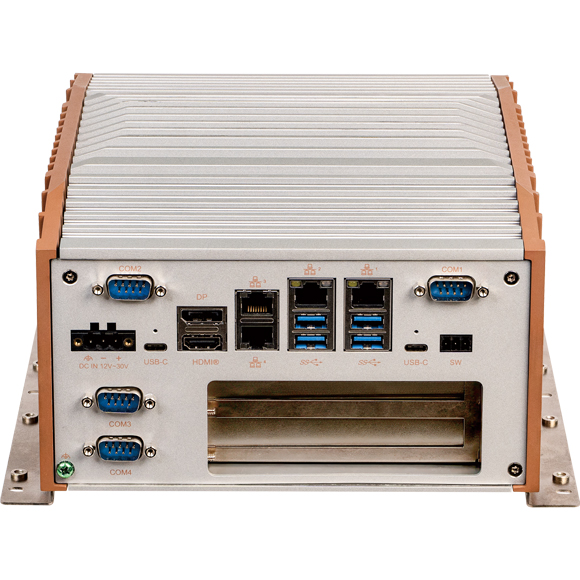
PCIe x8 slot and optional I/O interfaces compatible with DB44 supports, DIO modules, and FBI modules |
| PCIe extension |
1 PCIe x8 slot, card maximum length 169 mm, maximum power 20 W |
| SATA storage |
1 slot for 2.5-inch SATA 3.0 HDD or SSD |
| M.2 storage |
2280 Key M and 2242 Key B formats |
| M.2 Key M slot |
1 slot 2280, PCIe 4.0 x4, NVMe |
| M.2 Key B slot |
1 slot 2242/3052, PCIe 3.0 x2, USB 3.2, SATA, and SIM interfaces |
| M.2 Key E slot |
1 standard 2230 slot, PCIe x1 and USB 2.0 interfaces |
| Mini PCIe option |
1 slot on request replacing M.2 Key E, PCIe x1, USB 2.0, SATA, and SIM interfaces |
| Wireless connectivity |
Optional Wi-Fi or 4G LTE/5G |
| SIM card |
Internal micro-SIM slot |
| Antennas |
2 antenna openings |
| Ethernet |
4 RJ45 2.5 GbE ports with Intel I226-IT controllers |
| PoE |
1 of the 4 Ethernet ports with 15 W PoE power |
| DisplayPort |
1 DisplayPort 1.4a output, up to 3840 × 2160 at 60 Hz |
| HDMI |
1 announced HDMI 1.4b output, up to 3840 × 2160 at 60 Hz according to the manufacturer sheet |
| USB-C display |
DisplayPort 1.4a Alt Mode on 1 USB-C port, up to 3840 × 2160 at 60 Hz |
| Front USB |
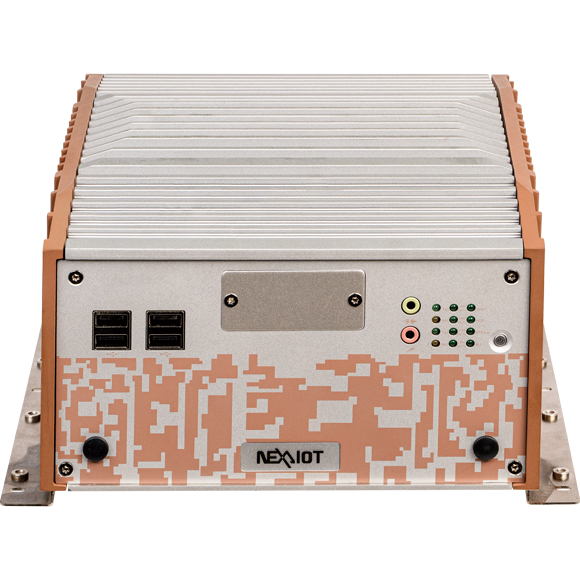
4 USB 2.0 Type-A ports |
| Rear USB Type-A |
4 USB 3.2 Gen 2 ports at 10 Gbit/s |
| Rear USB Type-C |
2 USB 3.2 Gen 2x2 ports at 20 Gbit/s |
| Power for first USB-C port |
Power Delivery up to 45 W, profiles 5 V/3 A, 9 V/3 A, and 15 V/3 A, with DisplayPort Alt Mode |
| Power for second USB-C port |
5 V/3 A, or 15 W |
| Internal USB |
1 vertical USB 2.0 Type-A connector for security dongle |
| Isolated serial interfaces |
2 DB9 RS-232/422/485 ports with 2.5 kV isolation |
| Additional serial interface |
1 DB9 RS-232 port |
| Internal digital inputs |
8 GPI, TTL level 5 V |
| Internal digital outputs |
8 GPO, TTL level 5 V |
| Audio |
1 line out and 1 microphone in, Realtek ALC888 codec |
| Security |
TPM 2.0 |
| Front control |
ATX power on/off button |
| Remote control |
3-pin connector for remote on/off |
| Indicators |
4 COM Tx/Rx indicators, 4 LAN activity indicators, GPO status, HDD/SSD activity, low battery, and M.2 Key M 2280 status |
| Power supply |
24 V DC input ±20 %, on 3-pin connector |
| Power modes |
AT and ATX, ATX by default |
| Dimensions |
204 × 272 × 99 mm, width × depth × height |
| Operating temperature |
−20 to +60 °C with air circulation, without additional card |
| Thermal test references |
IEC 60068-2-1, IEC 60068-2-2, and IEC 60068-2-14 |
| Storage temperature |
−20 to +80 °C |
| Relative humidity |
10 to 95 %, non-condensing |
| Shock resistance with HDD |
20 g, half sine wave 11 ms, in operation and wall-mounted |
| Shock resistance with SSD |
50 g, half sine wave 11 ms, in operation and wall-mounted |
| Shock test references |
IEC 60068-2-27 |
| Random vibration |
0.5 Grms from 5 to 500 Hz, according to IEC 60068-2-64 |
| Sinusoidal vibrations |
0.5 Grms from 5 to 500 Hz, value indicated by the manufacturer, according to IEC 60068-2-6 |
| Certifications |
CE and FCC class A |
| Operating systems |
Windows 11 IoT Enterprise LTSC, Windows 10 IoT Enterprise LTSC 64-bit, and Linux Ubuntu |
| CPU |
Intel Core Ultra |
| Mount options |
Table, Wall mount |
| Design |
Fanless |
| Ethernet ports count |
4 ports |
| Serial port |
3 |
| SKU |
NISE 3000 C30-E2 |
| Brand |
NEXCOM
|





 Configured and assembled in France