

How to choose your AI industrial Fanless PC ?
In the industrial sector, IT solutions for artificial intelligence play a crucial role in improving efficiency, precision, and automation of processes. An increasingly popular choice among technicians, machine learning engineers; and specialized engineers is the fanless PC for AI. These fanless systems are particularly suited for demanding industrial environments due to their robustness and their ability to operate reliably under these conditions. The majority of solutions will be adapted for inference with 100% fanless architectures. There are also hybrid PCs with ventilated extensions to accommodate powerful Nvidia GPU cards.
Discover the experts' advice from Integral System on the criteria for selecting fanless computer systems suited for AI applications in the industry.

Robustness and durability
Industrial environments often present difficult conditions such as dust, shocks, vibrations, extreme temperatures, and even humidity. It is therefore essential to choose a computer system designed to withstand these factors. Aluminum or stainless steel enclosures in the industrial range offer better heat dissipation and excellent resistance to shocks and vibrations. Furthermore, since they are not equipped with fans, and hence mechanical parts, these AI computers require little maintenance and possess exceptional durability.
Reliability is paramount in industrial environments where downtime can lead to significant financial losses. Fanless systems are advantageous because they have fewer moving parts that are likely to fail. However, it is also important to verify the quality of the components used and the presence of redundancy features, such as redundant power supplies and data backup systems. An extended warranty and responsive technical support are also aspects to consider.
At Integral System, we select high-quality components thanks to our leading market partners. Moreover, our technical team is here to assist you in providing the best possible support.
Performance and computing power at the edge
AI applications require significant computing power, especially for real-time data processing and executing machine learning algorithms. This is indeed a common use case in the industry, such as in industrial vision (machine vision). Opt for systems equipped with high-performance processors, such as Intel Core i7 or i9 processors, or embedded solutions like NVIDIA Jetson SoCs (System on Chip) with integrated GPUs for inference tasks. Also, ensure that the RAM is sufficient, with at least 8 GB for embedded inference applications, and expandable up to 64 GB or more depending on specific needs.
Note that on an ARM NVIDIA Jetson architecture, generally included in a Fanless architecture, it is preferable to execute pre-trained models that will be much more suited to the capabilities of these devices.
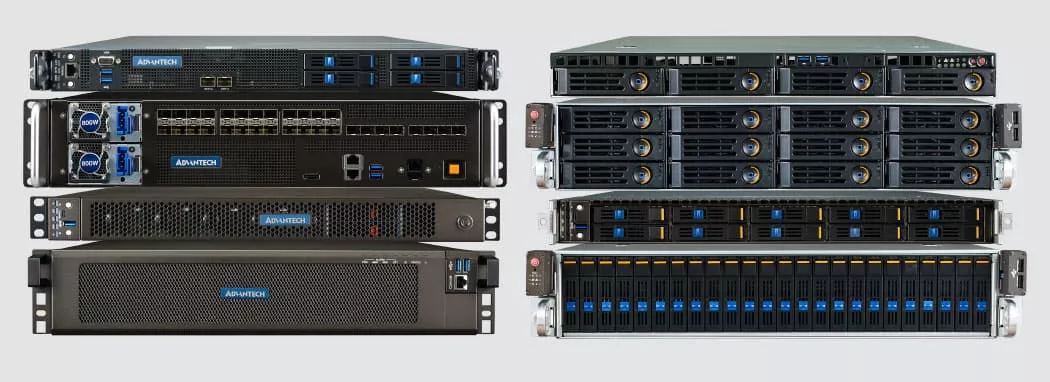
We will prefer industrial PCs with GPUs for executing tasks of powerful models or machine learning and deep learning. The latter, much more powerful than their fanless counterparts, will respond much better to these needs.
Efficient thermal dissipation
One of the major challenges of fanless systems is heat management, particularly in the area of AI model execution. Indeed, these systems are very performance-intensive and therefore generate a lot of heat. Good thermal design is crucial to avoid overheating and ensure stable performance. Prefer devices equipped with efficient heat sinks and passive thermal designs. Natural conduction and convection technologies are often used in these systems to maximize thermal dissipation without relying on mechanical components like fans.
Furthermore, the components of these computers are specifically selected by Integral System for their:
- Resistance to extreme temperatures
- Longevity and availability over time
- Durability
Connectivity and integration
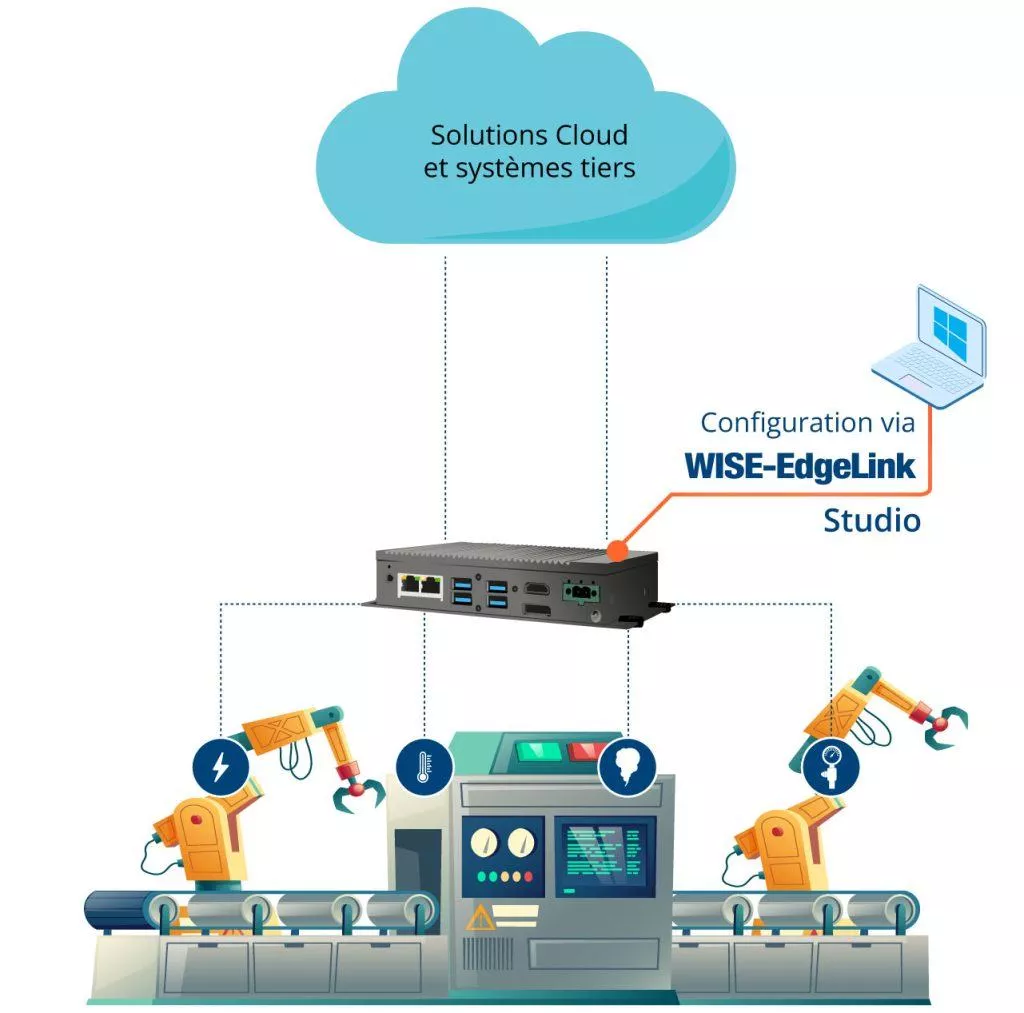
Industrial applications often require diverse connectivity to integrate various sensors, actuators, communication with controllers, SCADA, MES, and other field devices. Therefore, it is important to choose systems that offer a complete range of input/output ports, including USB 3.0, ethernet, RS-232/485 serial, ... Additionally, the ability to add PCIe expansion slots for extra functionalities like data acquisition cards or wireless communication modules is a plus.
Compatibility with industrial protocols such as Modbus/TCP, Modbus/RTU, OPC-UA, PROFINET, CanBUS, or PROFIBUS can also be a crucial selection criterion. Due to this density of protocols, it is also possible to integrate communication gateway solutions like EdgeLink. This will facilitate the integration of your AI projects in the edge.
Finally, as each project is specific, do not hesitate to seek advice from our teams to help you choose equipment for dedicated artificial intelligence.
Use Cases and Application Examples
To better understand the specific requirements, it is helpful to examine concrete use cases. For example, in an automotive manufacturing plant, a fanless computer system can be used to monitor production lines in real-time using cameras and smart sensors or IoT devices. AI algorithms can detect anomalies in the production process and trigger corrective actions immediately, thereby reducing defects and increasing efficiency. In another case, a mining operation can use these systems to analyze geological sensor data and optimize extraction operations.
The choice of a fanless computing system tailored for AI applications in the industry requires a careful evaluation and design of several criteria, ranging from robustness and performance to connectivity and security. By considering specific environmental factors, computation power needs, and maintenance requirements, technicians and engineers can select solutions that not only address current challenges but also enable future scalability. A methodical approach in this selection ensures not only the integration of AI technologies but also a sustainable improvement in the efficiency and reliability of industrial operations.